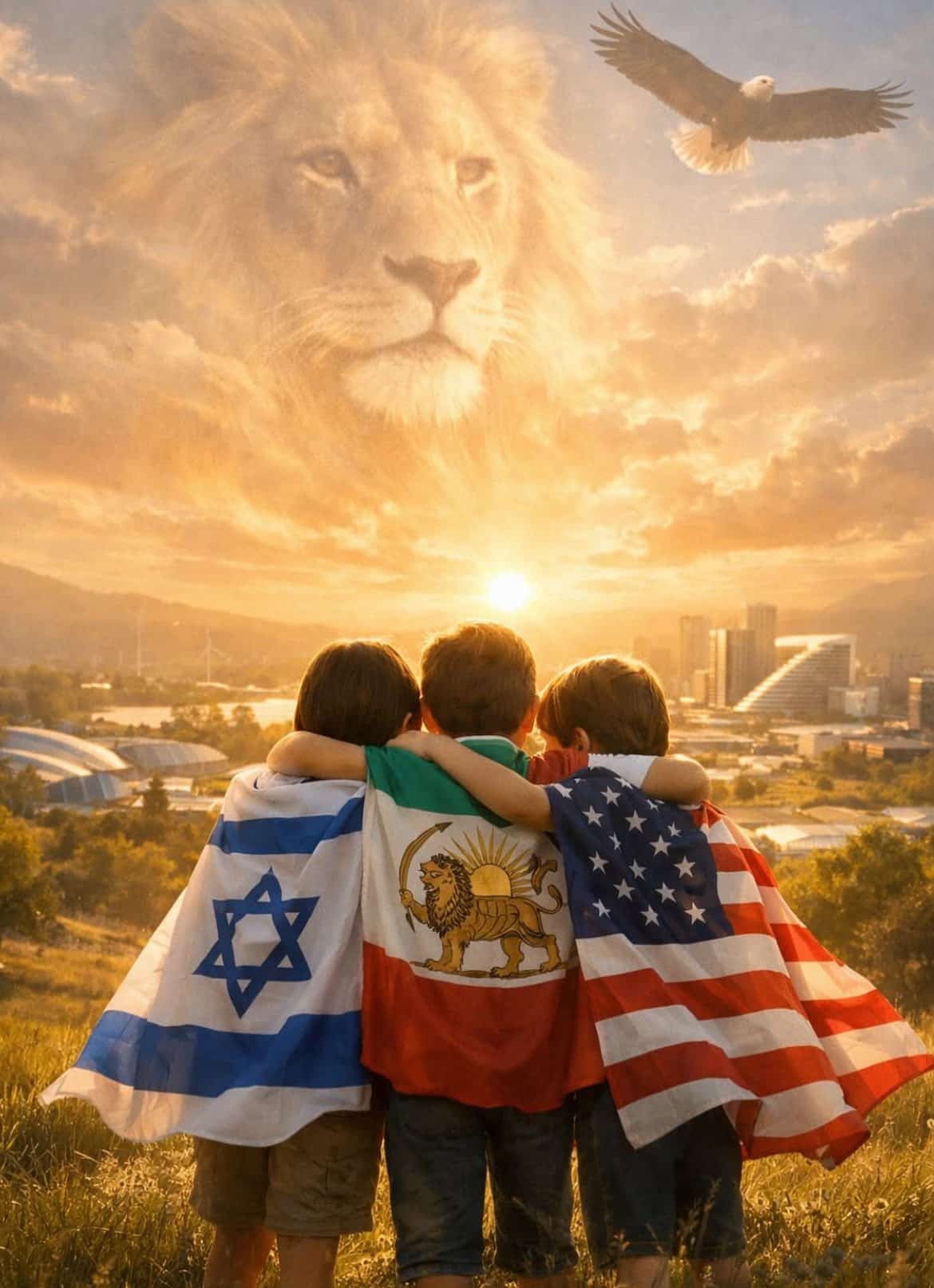
 Wars rarely begin when the missiles launch. They begin years earlier, sometimes decades earlier, in ideology, threats, and actions that slowly accumulate until a response becomes unavoidable.
For the United States and Iran, that timeline stretches back nearly half a century.
Since the 1979 revolution, the Iranian regime has built its identity around hostility toward the United States and its allies. The chants of “Death to America” were never merely rhetorical theater. They reflected a political system that has funded militant proxies, threatened regional stability, and pursued strategic weapons capable of projecting violence far beyond its borders.
When President Donald Trump authorized Operation Epic Fury to strike Iran’s nuclear weapons program and ballistic missile infrastructure, the decision was framed by the administration as a defensive necessity rather than an act of expansion.
In announcing the operation, the president put the argument plainly: “An Iranian regime armed with long-range missiles and nuclear weapons would be a dire threat to every American. We cannot allow a nation that raises terrorist armies to possess such weapons.”
A majority of voters appear to agree.
According to new polling, 52 percent of likely U.S. voters approve of the decision to attack Iran’s nuclear and missile capabilities, including 35 percent who strongly approve. Forty-two percent disapprove, with about thirty percent expressing strong opposition.
On the broader strategic principle — whether Iran should be allowed to possess such weapons — the consensus is even clearer. Sixty-five percent of voters agree with the president’s warning about the danger posed by a nuclear-armed Iranian regime, including nearly half who say they strongly agree.
These numbers suggest that while Americans remain cautious about military conflict, many view the Iranian regime’s ambitions as a credible security threat.
A Defensive Doctrine
The administration has emphasized that the operation was designed with limited objectives: degrading Iran’s nuclear and missile capabilities while minimizing civilian casualties.
That distinction matters.
Iran’s own military posture has frequently relied on proxy militias and missile attacks across the region, often aimed at civilian population centers or commercial shipping lanes. By contrast, U.S. officials describe the strikes as targeted actions against military infrastructure tied to weapons development.
In modern conflict, the line between offense and defense can blur quickly. But the strategic logic behind the operation rests on a long-standing doctrine in American national security: preventing hostile regimes from acquiring weapons capable of catastrophic escalation.
The Strategic Stakes
The stakes extend well beyond the immediate battlefield.
A nuclear-armed Iran would alter the balance of power throughout the Middle East. It would threaten American forces stationed across the region, embolden militant networks supported by Tehran, and potentially trigger a cascade of nuclear proliferation among neighboring states.
For decades, U.S. policy — across both Republican and Democratic administrations — has centered on preventing that outcome.
The question has never been whether Iran’s nuclear ambitions pose a risk. The debate has been over how best to stop them.
A Divided but Determined Public
The polling reflects that tension.
While a majority supports the strike, a substantial minority remains skeptical of military intervention. That division echoes broader American fatigue with long overseas conflicts. Voters remember Iraq and Afghanistan. They know how quickly limited operations can expand into prolonged engagements.
Yet the numbers also show that many Americans recognize the gravity of the threat.
Preventing nuclear proliferation has long been one of the few areas where national security consensus still exists. Even in a polarized political environment, the idea that hostile regimes should not obtain nuclear weapons remains widely accepted.
Why Nations Fight
In the end, wars are rarely about abstract strategy alone. They are fought over the fundamental responsibility of governments to protect their citizens.
The United States did not choose the ideological hostility of the Iranian regime. But when a government openly calls for American destruction while pursuing weapons capable of carrying out that threat, ignoring the danger becomes its own risk.
That is the context in which many voters appear to view the conflict.
Not as a war of choice — but as a confrontation decades in the making, one rooted in the enduring tension between security and restraint.
And in that tension lies the oldest question in statecraft:
When does defense become necessity?




0 Comments