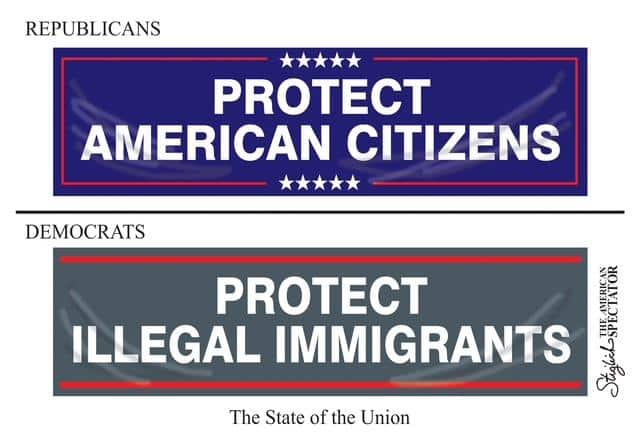
Let’s start with a simple truth that Washington elites often pretend not to understand:
Americans want secure elections.
Not complicated elections.
Not ideological elections.
Secure elections.
And the latest polling data makes that crystal clear.
A strong majority of American voters—63%—support the SAVE Act, legislation that would require proof of U.S. citizenship when registering to vote in federal elections.
Even more striking: 47% strongly support the measure.
That’s not lukewarm approval.
That’s a political signal flare.
The Core Issue: Who Gets to Vote in America?
The Safeguard American Voter Eligibility (SAVE) Act addresses a question that most Americans consider common sense:
Should only American citizens vote in American elections?
For the overwhelming majority of voters, the answer is obvious.
The SAVE Act would simply require documented proof of citizenship during federal voter registration. That’s it. No elaborate bureaucracy. No new ideological tests.
Just proof that the person voting is actually an American citizen.
Yet in Washington, even this basic safeguard has become controversial.
The Poll Numbers Washington Can’t Ignore
Here’s what the data shows:
|
Measure |
Percentage |
|
Support SAVE Act |
63% |
|
Strongly Support |
47% |
|
Oppose |
32% |
|
Strongly Oppose |
21% |
But the deeper story is in the cross-party support.
|
Political Group |
Support SAVE Act |
|
Republicans |
88% |
|
Democrats |
43% |
|
Independents |
60% |
Let that sink in.
Even with months of activist messaging claiming the law is somehow “restrictive,” nearly half of Democrats still support it.
Independents support it by a wide margin.
And Republicans support it overwhelmingly.
In other words:
This is not a partisan position.
It’s a public trust issue.
Why This Issue Keeps Coming Back
Election security has become one of the defining political debates of the modern era.
Not because Americans are obsessed with conspiracy theories—as the media often suggests.
But because confidence in institutions has eroded.
When people lose trust in government systems, they start asking basic questions:
- Are voter rolls accurate?
- Are safeguards strong enough?
- Are election systems protected from abuse?
The SAVE Act is an attempt to answer those questions with something simple:
Verification.
You need ID to open a bank account.
You need ID to board a plane.
You need ID for countless routine interactions with government.
Yet somehow asking for citizenship verification for federal voting has become controversial in Washington.
That disconnect is exactly why voters keep demanding reform.
The Political Trap for Senate Democrats
The House of Representatives already approved the SAVE Act last year.
Now the bill sits in the Senate.
Which means senators face a choice:
- Side with the majority of voters
- Side with activist pressure groups
And that choice is politically dangerous.
Blocking a bill supported by 63% of voters—including large numbers of independents—comes with risks.
Because election security is one of the rare issues where public opinion is clear and durable.
People may disagree about tax policy.
They may disagree about spending.
But they overwhelmingly agree that elections must be protected.
Why Ballot Security Is Becoming a National Demand
For many Americans, the SAVE Act isn’t radical.
It’s overdue.
In fact, most developed democracies already require some form of citizenship verification or national identification for voting.standards.
That inconsistency has fueled distrust.
And distrust fuels political instability.
Which is exactly why this issue keeps rising back to the surface.
The Bottom Line
The polling numbers tell a story Washington can’t spin away:
Americans want election security.
They want voter rolls that reflect actual citizens.
They want safeguards that protect the integrity of the ballot.
And increasingly, they want Congress to stop debating the obvious.
The SAVE Act represents a straightforward step toward restoring trust in federal elections.
The question now isn’t whether voters support it.
They do.
The real question is whether Congress will listen




0 Comments