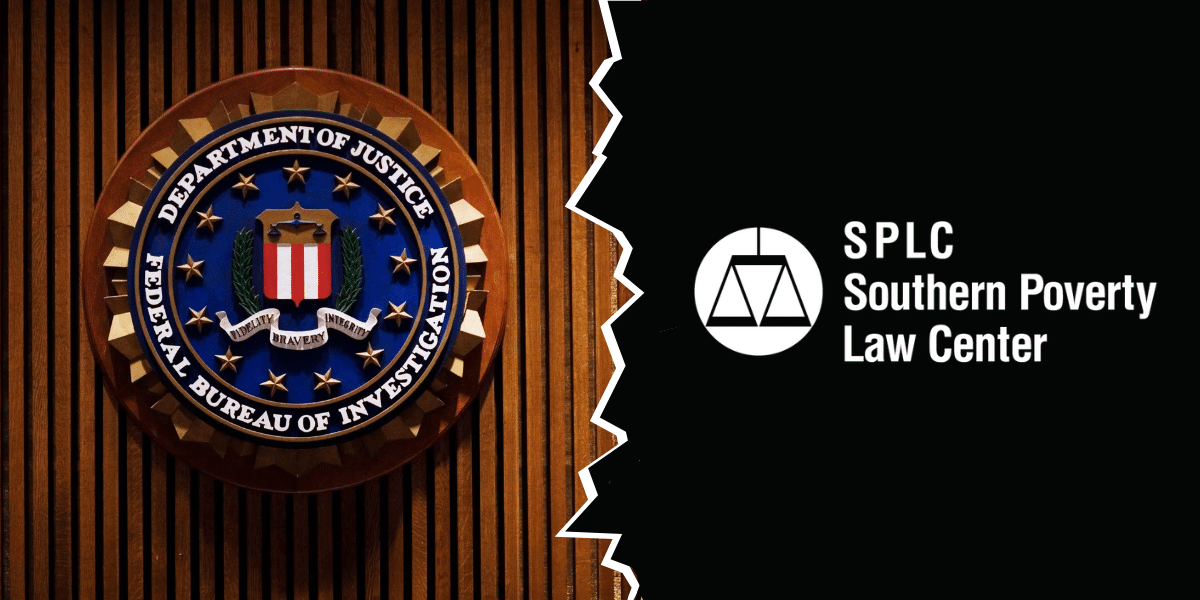
Image Credit: Yellowhammer News
Well, well, well.
Nothing says “moral authority” quite like a federal indictment.
For years, the Southern Poverty Law Center—better known as the SPLC—positioned itself as the nation’s self-appointed referee of extremism.
They labeled.
They tracked.
They warned.
And now?
They’re being indicted on:
- wire fraud
- false statements to a federally insured bank
- conspiracy to commit money laundering
Eleven counts.
Eleven.
But don’t worry—this is where the story gets even more American.
The Public Reaction: “Yeah… But Will Anything Actually Happen?”
Because voters, ever the realists, are looking at this situation and asking the only question that matters:
“Is anyone actually going to prison?”
The answer?
- 37% say it’s likely SPLC leaders will face prison time
- Only 13% say very likely
- 46% say it’s unlikely
- Including 13% who say not at all likely
- 18% aren’t sure
Translation:
Even when indicted, people don’t expect consequences.
That’s not cynicism.
That’s pattern recognition.
The Accountability Gap
Let’s break this down.
A federal grand jury indicts a high-profile organization on serious financial charges.
And the public response is essentially:
“We’ve seen this movie. Nobody important goes to jail.”
That’s not just skepticism.
That’s a collapse in institutional credibility.
The Reputation Problem
Now here’s where things get even more… balanced.
When voters are asked how they view the SPLC:
- 33% view it favorably
- 17% very favorable
- 33% view it unfavorably
- 22% very unfavorable
- 34% aren’t sure
That’s not a reputation.
That’s a coin flip with a large group watching from the sidelines.
The Satirical Irony
For an organization that built its brand on:
- identifying bad actors
- exposing wrongdoing
- warning the public about threats
…it now finds itself in the unfamiliar position of being:
The subject of the investigation.
That’s not just irony.
That’s narrative inversion.
The “Not Sure” Crowd Says Everything
Let’s talk about that 34% who aren’t sure what to think about the SPLC.
That’s not apathy.
That’s confusion.
Because when an organization spends years presenting itself as:
- authoritative
- credible
- morally certain
…and then gets indicted?
People don’t just change their opinion.
They pause.
They reassess.
The Bigger Pattern
This isn’t just about one organization.
It’s about a broader dynamic voters are starting to notice:
Institutions that:
- claim moral authority
- operate with public trust
- and influence national narratives
…are not immune to scrutiny.
And when that scrutiny finally arrives?
The public doesn’t react with shock.
They react with:
“About time.”
The Cynical Truth
Here’s the uncomfortable reality.
Americans have watched enough investigations, hearings, and indictments to understand something simple:
Accountability is uneven.
Sometimes it’s swift.
Sometimes it’s symbolic.
And sometimes…
It never quite materializes.
The Bottom Line
The polling tells a story that’s less about outrage and more about expectation:
- Voters are divided on the SPLC itself
- A plurality doesn’t expect meaningful legal consequences
- And a large segment remains uncertain about what to believe
Which leaves us with one lingering question:
If institutions built on exposing wrongdoing are themselves accused of it…
Who exactly is left to do the exposing?
Because in today’s environment, one thing is becoming clear:
Credibility isn’t claimed anymore.
It’s tested.
And once tested—
It doesn’t always survive.




0 Comments